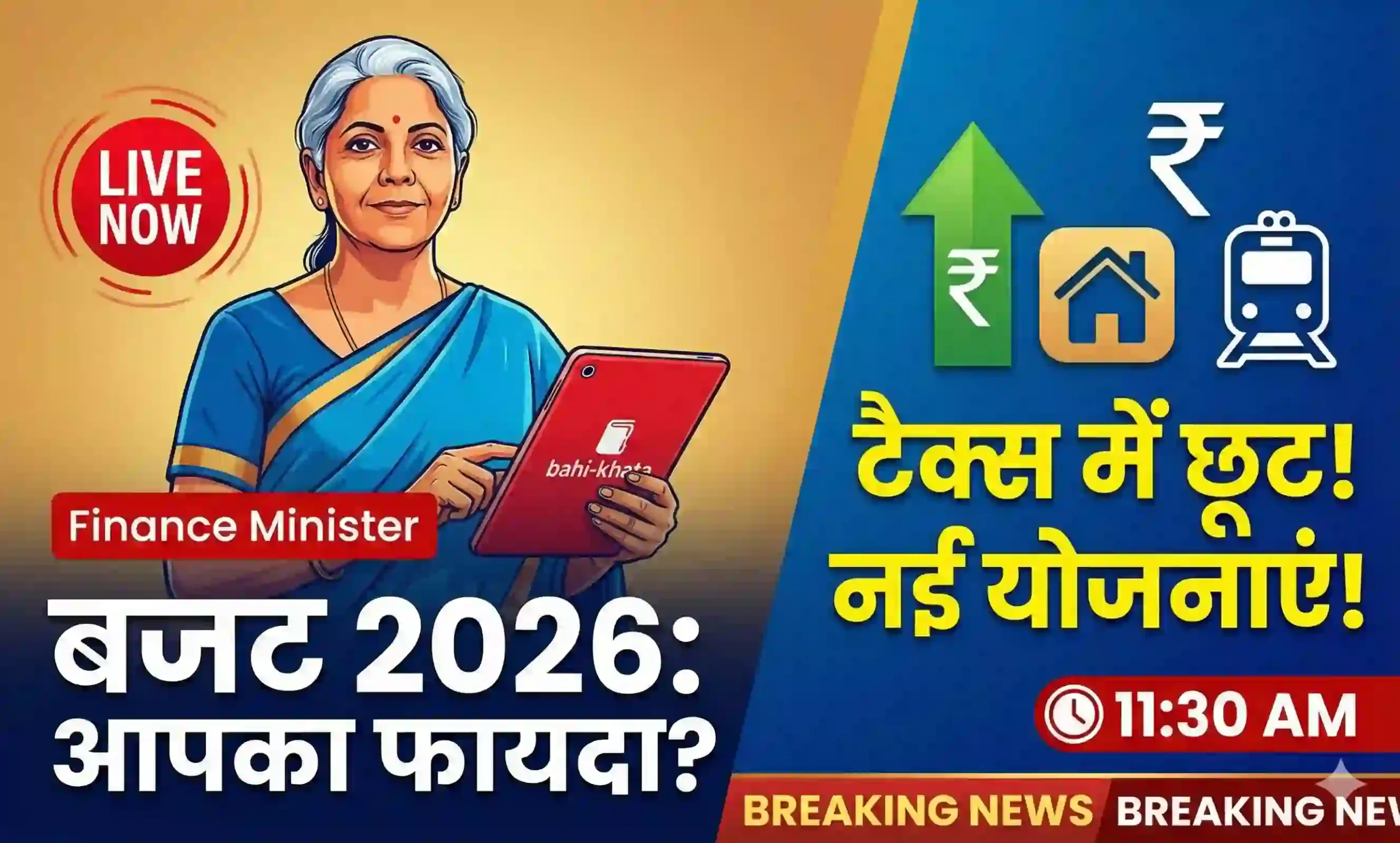
The Union Budget 2026–27, presented by Finance Minister Nirmala Sitharaman on February 1, 2026, is not a headline-driven or populist budget. Instead, it is a structurally focused fiscal statement aimed at strengthening India’s long-term economic foundations while navigating global uncertainty.
Executive Summary
The Union Budget 2026–27 prioritizes infrastructure-led growth, manufacturing competitiveness, MSME resilience, and fiscal discipline. Personal income tax policy remains largely unchanged, reinforcing predictability. Capital expenditure continues at elevated levels, with strong focus on railways, transport, defence, and technology-enabled manufacturing. The Budget signals continuity, stability, and long-term capacity building rather than short-term stimulus.
Economic Context: Why Budget 2026 Matters
India enters FY 2026–27 as one of the world’s fastest-growing large economies. Domestic consumption, services exports, and sustained public investment have underpinned growth, even as global conditions remain challenging.
Key macro considerations influencing the Budget:
- Elevated global interest rates
- Geopolitical instability affecting trade and energy markets
- Supply-chain realignment and “China+1” opportunities
- Rising expectations for job creation and income growth
Analysts cited by Firstpost emphasized that India needs supply-side reforms and productivity gains, not fiscal giveaways. Budget 2026 largely reflects this thinking.
Income Tax and Personal Finance: What Budget 2026 Signals
Income Tax Slabs and Rates
According to live updates from Mint and The Times of India, Budget 2026–27 does not introduce major changes to income tax slabs.
Key points for taxpayers:
- The simplified new tax regime remains central
- No fresh overhaul of slabs or rates
- Policy stability prioritized over incremental relief
The government appears focused on consolidating earlier reforms rather than frequent tinkering.
Strategic Direction of Tax Policy
Experts quoted in Mint and Firstpost suggest the long-term objective remains:
- Gradual reduction in exemptions
- Simplification of compliance
- Predictable tax environment
Impact:
For individuals and professionals, this supports long-term financial planning and consumption stability.
Capital Expenditure: Infrastructure as the Growth Multiplier
Public capital expenditure remains the backbone of Budget 2026–27.
Why Capex Matters
- High employment generation
- Strong multiplier effect
- Crowds in private investment
- Improves logistics efficiency
According to Financial Express and Hindustan Times, infrastructure spending continues to command a significant share of government expenditure.
Sector-Wise Breakdown: Budget 2026–27
1. Infrastructure & Transport
| Focus Area | Budget 2026 Direction | Expected Impact |
|---|---|---|
| National Highways | Continued expansion | Lower logistics cost |
| Urban Infrastructure | Metro & city projects | Urban productivity |
| Asset Monetization | Public-private models | New investment cycle |
2. Railways
Railways remain a flagship growth driver.
| Component | Key Focus |
|---|---|
| Safety & Modernization | Upgraded stations, signaling |
| Freight Corridors | Faster goods movement |
| High-Speed Rail | Regional connectivity |
Reports from Zee News and Hindustan Times highlight railways as central to logistics reform.
3. Defence & Strategic Manufacturing
Defence allocations remain steady amid global uncertainty.
| Area | Budget Emphasis |
|---|---|
| Indigenous Manufacturing | Reduced imports |
| R&D | Advanced capabilities |
| Defence Exports | Global competitiveness |
Coverage from NDTV and The Hindu notes defence as both a security and industrial priority.
4. Manufacturing & Industrial Policy
Semiconductor Ecosystem
According to The Times of India, the government reiterated its commitment to semiconductor manufacturing.
| Objective | Strategic Goal |
|---|---|
| Chip Production | Supply chain security |
| Skilled Workforce | High-value jobs |
| Global Integration | Electronics exports |
Pharmaceuticals & Biotechnology
| Focus | Impact |
|---|---|
| Bulk Drugs | Reduced dependence |
| Biotech R&D | Innovation-led growth |
| Exports | Global healthcare role |
5. MSMEs & Small Businesses
MSMEs remain central to employment.
| Support Area | Policy Direction |
|---|---|
| Credit Access | Strengthened guarantees |
| Growth Capital | Long-term funds |
| Ease of Doing Business | Process simplification |
Reporting from The News Minute highlights continuity rather than disruptive policy shifts.
6. Agriculture & Rural Economy
Agriculture policy in Budget 2026 emphasizes stability.
| Area | Focus |
|---|---|
| Productivity | Technology & irrigation |
| Rural Infrastructure | Roads, storage |
| Credit Access | Institutional finance |
Coverage from The Hindu and Zee News underscores agriculture’s role in sustaining rural demand.
7. Education, Skills & Employment
Human capital remains a long-term priority.
| Initiative | Objective |
|---|---|
| Skill Development | Industry alignment |
| Digital Education | Future-ready workforce |
| Vocational Training | Youth employment |
8. Auto & Consumer Sectors
Pre-budget analysis by Financial Express shows the auto sector remains sensitive to:
- Interest rates
- Infrastructure growth
- Consumer sentiment
Budget 2026’s infrastructure push indirectly benefits autos and ancillaries.
Fiscal Discipline and Deficit Management
According to expert analysis in Mint and Firstpost, Budget 2026 reflects:
- Commitment to medium-term fiscal consolidation
- Balanced growth spending
- Avoidance of excessive populism
This approach supports macroeconomic stability and investor confidence.
Market Reaction and Investor Interpretation
Initial reactions reported by Hindustan Times and Zee News indicate:
- Muted equity movement
- Sector-specific optimism
- Cautious bond market response
Investors are expected to favor infrastructure, manufacturing, logistics, and defence-linked sectors.
Definition:
The Union Budget 2026–27 is India’s annual fiscal plan outlining government revenue, expenditure, and policy priorities, with a focus on infrastructure-led growth, manufacturing strength, and fiscal discipline.
Why It Matters:
- Drives employment through infrastructure investment
- Enhances long-term competitiveness
- Provides tax stability for households
- Strengthens strategic sectors
- Supports macroeconomic resilience
Best-Practice Summary:
Budget 2026 follows a long-term framework of capital investment, policy continuity, and supply-side reforms rather than short-term stimulus.
HowTo: How to Understand Union Budget 2026 Step-by-Step
Step 1: Identify Big Themes
Focus on capex, infrastructure, manufacturing, and fiscal discipline.
Step 2: Check Personal Impact
Review income tax continuity, savings implications, and employment prospects.
Step 3: Analyze Sector Signals
Look for allocations affecting your industry or investments.
Step 4: Track Medium-Term Goals
Assess how policies align with 3–5 year growth strategies.
Step 5: Ignore Short-Term Noise
Budgets matter more for structural direction than daily market reactions.
Frequently Asked Questions (FAQ)
What is the main focus of Union Budget 2026–27?
Infrastructure-led growth, manufacturing strength, MSME support, and fiscal stability.
Did income tax slabs change in Budget 2026?
No major changes were announced; stability was prioritized.
Which sectors benefit the most?
Infrastructure, railways, defence, manufacturing, and logistics-linked sectors.
Is Budget 2026 good for investors?
It supports long-term investors through predictability and capex-driven growth.
Does Budget 2026 help job creation?
Yes, indirectly through infrastructure, manufacturing, and skill development.
Is this a populist budget?
No. Analysts describe it as structural and growth-oriented.
How does Budget 2026 affect the middle class?
Through tax stability, employment generation, and infrastructure-driven growth.
Conclusion: Why Budget 2026 Is Structurally Important
The Union Budget 2026–27 reinforces India’s strategic economic direction. Rather than offering short-term incentives, it focuses on:
- Infrastructure as a growth engine
- Manufacturing and technology competitiveness
- Employment through investment
- Fiscal credibility
For search engines, analysts, businesses, and citizens alike, Budget 2026 stands out as a capacity-building budget designed to support India’s economic trajectory well beyond the current fiscal year.
Sources
Times of India, Mint, The Hindu, NDTV, The News Minute, Financial Express, Hindustan Times, Zee News, Firstpost (live blogs, analysis, and expert commentary).